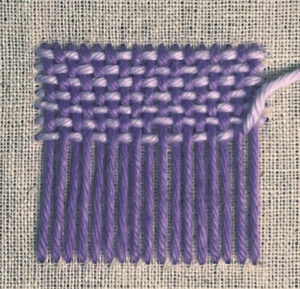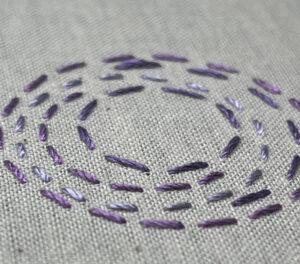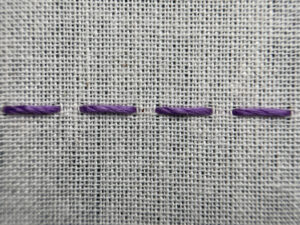
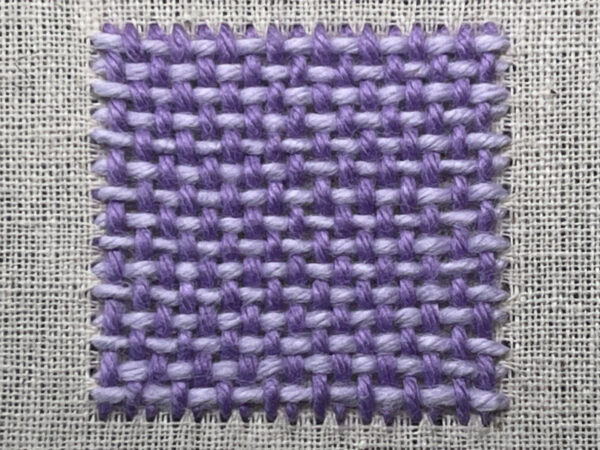
There are various Darning Stitches. Above is called Surface Darning. This stitch is a form of darning with minimal contact with the fabric. A layer of slightly-spaced laid work is stitched, and then another layer at 90 degrees is woven in and out of the laid work. Both layers of stitching only penetrate the fabric at the start and end of each row. This can be worked in line with the grain of the fabric, or at an oblique angle.
- Step One through Step Three below shows how easily you can do this stitch:
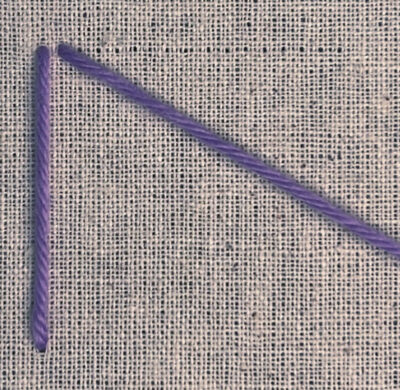

Step Two:
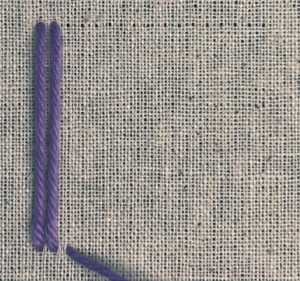
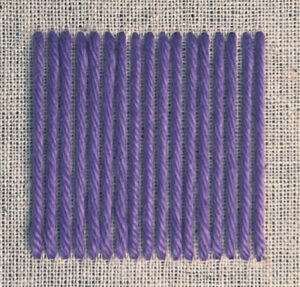
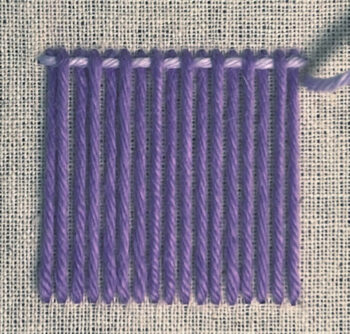
To start the weaving, bring the needle up to the surface at an adjacent edge and weave it over and under the vertical stitches. Take the needle down at the opposite edge.
Now, bring the needle up on the same edge, leaving a small space between the horizontal threads. Weave the needle back in the opposite direction, so it alternates with the threads of the previous row.
Draw through the thread.
Tease it into place with a blunt tapestry needle (our gold needle is perfect) to create a straight line.
Continue working back and forth. See picture at the top for finished.